News & views

180 Systems Change Control Is Where ERP Projects Get Tested (1)

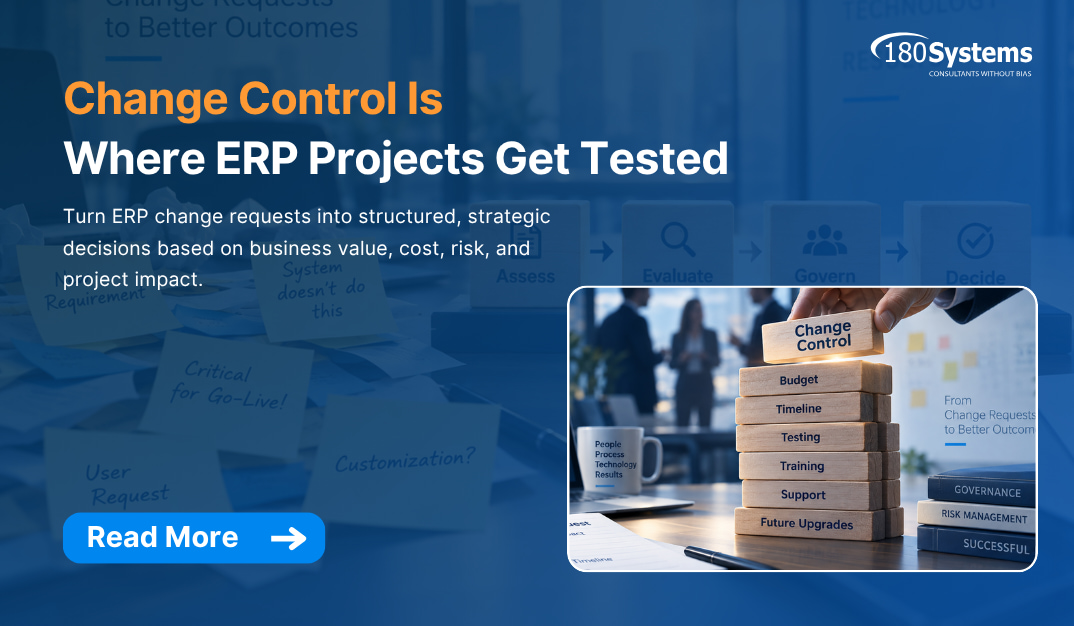
Change Control Is Where ERP Projects Get Tested

Every ERP implementation eventually reaches the same point. Training and testing begins using real scenarios and someone says: “The new system doesn’t do what our current system does.” No matter how thorough the requirements gathering process was, new requirements will emerge during implementation. Some are legitimate gaps. Some are misunderstood requirements. Others are simply users discovering a different way of working. This is where a strong change control process and a strong project manager become critical. One of the project manager’s most important responsibilities is preventing emotional decisions. Users will naturally want immediate answers and, in many cases, every requested […]

Read More…

180 Systems - What Is MCP and Why It Matters for ERP

What Is MCP and Why It Matters for ERP

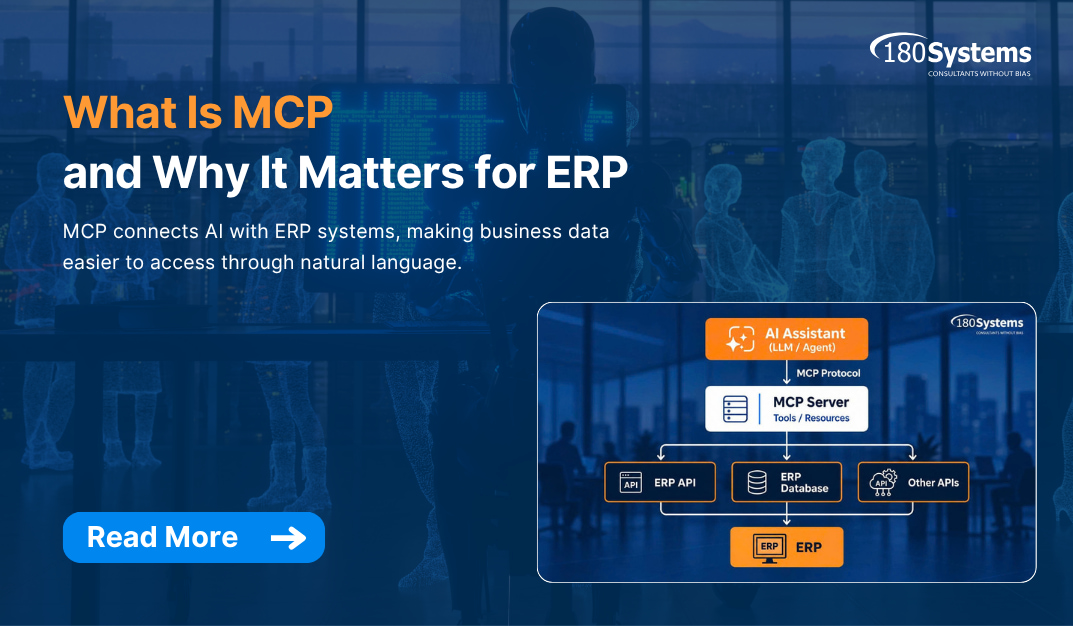
MCP (Model Context Protocol) is yet another 3-letter technology acronym that you are going to hear a lot about over the next few years. MCP is a way for AI to interact with your ERP system without needing to know the underlying database or API (application programming interface – a connection between computers or software programs). A typical architecture per ChatGPT is as below: You would use natural language like you’re probably already doing with ChatGPT or Claude to get what you want such as finding out the number of available units of a certain inventory item or asking for […]

Read More…

180 Selection Process Automation

180 Selection Process Automation

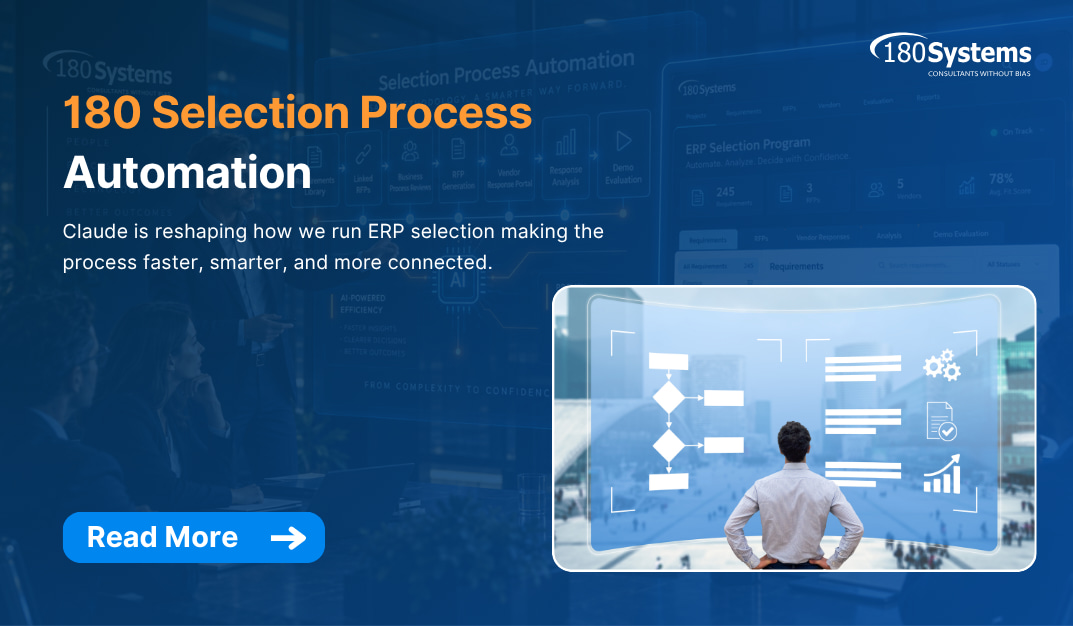
We have been doing selection projects for 20 years and have fine-tuned the methodology over the years to be as efficient and effective as possible. But that was before Claude. We have now changed how we do it, not what we do. Improvements include: Maintain a requirements library across multiple industries. In the past, when working in Excel for a specific client, we did not concern ourselves whether another RFP contained a similar or the same requirement. Now, we need to merge these requirements and group them logically or the requirements library will become too big and cumbersome to find […]

Read More…

180 Systems ERP Is an Organizational Stress Test

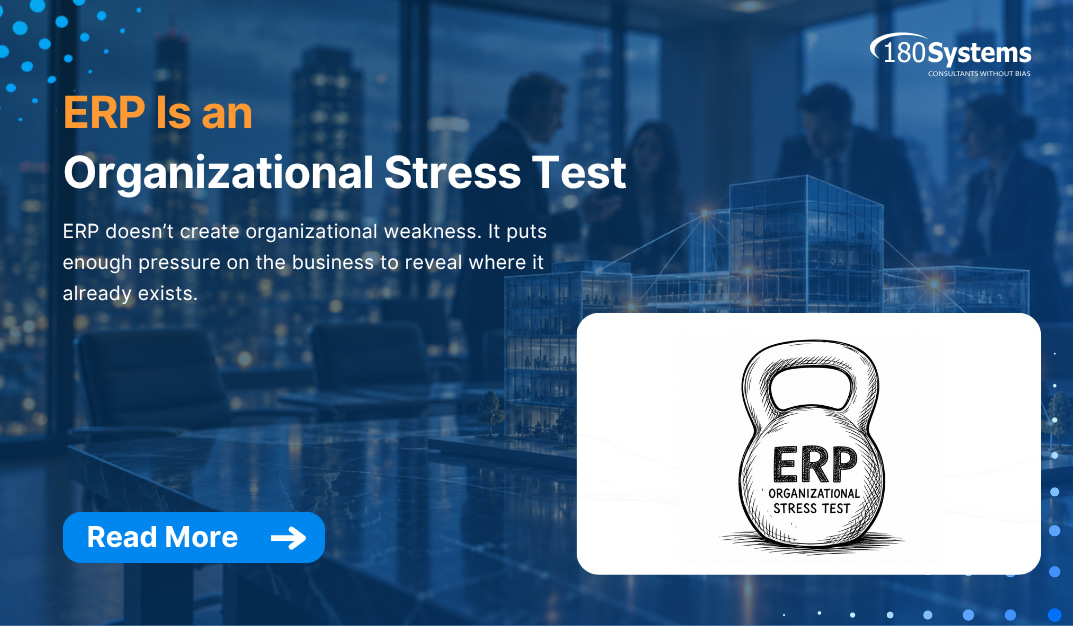
ERP Is an Organizational Stress Test

One of the interesting things about working across different ERP transformations is realizing that the technology is often the least surprising part. Systems behave more or less the way systems behave. They require configuration, testing, data, integrations, training, and a healthy tolerance for meetings with acronyms. What varies dramatically is the organization surrounding the technology, and I have become increasingly convinced that an ERP implementation is one of the most effective organizational stress tests a company can put itself through. We usually assess ERP readiness by looking at technology, resources, data, timelines, scope, and whether the organization has enough people […]

Read More…

180 Systems_The Best Integrations Leave Some Things Alone (2)

The Best Integrations Leave Some Things Alone

I have always admired people who restore old homes. Not the television version where someone walks through the front door, knocks down three walls, installs a kitchen the size of a small airport, and declares the house “modernized.” I mean the people who spend hours carefully restoring the original hardwood floors, repairing old stained-glass windows, or bringing century-old brickwork back to life. They understand something that is surprisingly easy to forget. Just because something is old or different doesn’t mean it needs replacing. Sometimes the goal isn’t to make the house look new. Sometimes the goal is to preserve the […]

Read More…

180 Systems Status Report Project Management (3)

A Green Status Report Can Still Hide a Red Project

One of the biggest risks in project management is not always an obvious problem. Sometimes, it is a project that looks healthy on paper. The status report is green. Milestones appear to be on schedule. Meetings are happening. Action items are being closed. Leadership sees progress. But beneath the surface, the project may be carrying unresolved decisions, incomplete testing, unclear ownership, limited stakeholder engagement, or growing resource constraints. In other words, a project can be green today and still be heading toward red. Green Should Mean More Than “Nothing Has Failed Yet” Traditional project reporting typically focuses on: Schedule Budget […]

Read More…

180 Systems Summer Get-Together Growing Together (1)

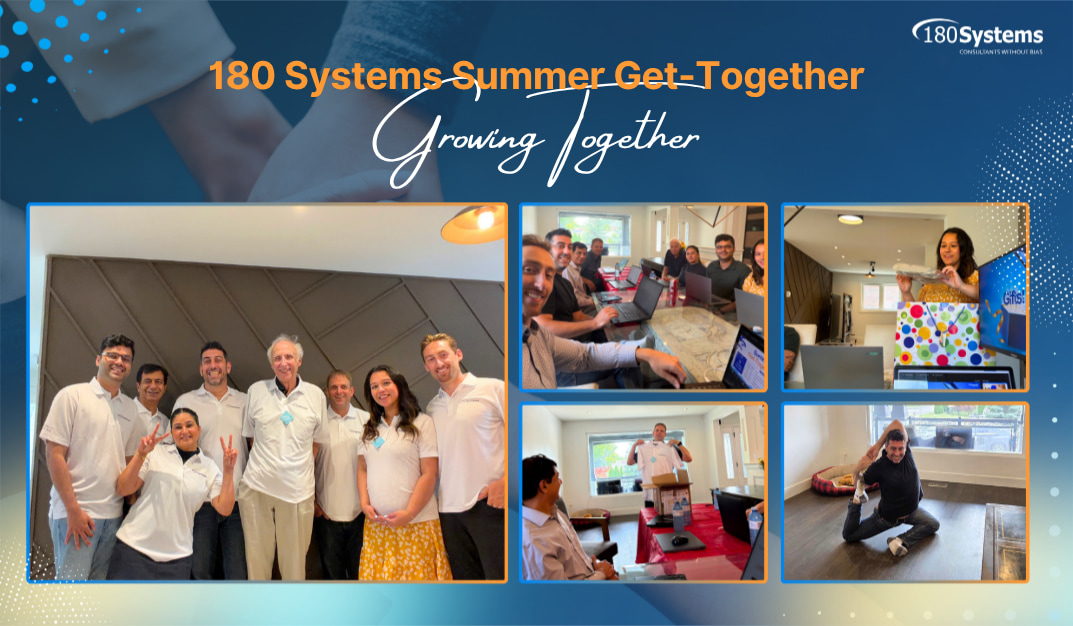
180 Systems Summer Get-Together: Growing Together

This summer, the 180 Systems team got together for a ½ day away from our usual client work and virtual meetings at the home of Alex Miles in Hamilton. Our agenda included core values, which was updated and now consists of: Integrity – Never say anything that is not true. Postive Attitude – Always make the best of every situation. Resourcefulness – Find creative, practical ways to solve problems and improve business processes. Hard Work – Work hard, but not at the expense of family. Gratitude – We all have a lot to be thankful for. Commitment – Act with a high sense of urgency and […]

Read More…

180 Systems Maybe They Aren’t Resisting Change

Maybe They Aren’t Resisting Change

I have heard the phrase “resistance to change” so many times over the years that I rarely questioned it. A new system is introduced, people start pushing back, and somewhere in a meeting someone inevitably concludes that we have a change management problem. The diagnosis usually arrives remarkably quickly, followed by familiar prescriptions involving more communication, more training, and perhaps another town hall explaining why everyone should be excited about the transformation. Meanwhile, some of the people actually doing the work are sitting there thinking that enthusiasm is wonderful, but it still takes them twice as long to complete Tuesday’s […]

Read More…

180Systems_When Good Decisions Produce Bad Outcomes (1)

When Good Decisions Produce Bad Outcomes

One of the things that has always fascinated me about integration meetings is that you can leave the room feeling surprisingly optimistic while unknowingly creating tomorrow’s problems. Everyone has contributed and every concern has been addressed: the meeting ends on time, action items are assigned, and there is a quiet sense that real progress has been made. If someone had wandered into the room during the last five minutes, they probably would have assumed the integration was in excellent shape. Then, a few months later, people begin asking why the expected value hasn’t materialized. Over the years, I’ve started to […]

Read More…